Showing posts with label MAGIC HISTORY. Show all posts
We Generate Fears While We Sit.....

I love this pairing of quotation and image (below). Before we act, our imaginations often run wild, but when we move forward we often find the path ahead far less daunting than the horrifying version we had created in our minds.
2. “Whether You Think You Can Or Think You Can’t, You’re Right.” – Quote By Henry Ford
Truly a quote to live by, the American captain of industry, Henry Ford, made this proclamation while reflecting on his life. He is still one of the wealthiest figures of the modern period. Ford also said, “Failure is simply the opportunity to begin again, this time more intelligently.”
3. “The Man Who Has Confidence In Himself Gains The Confidence Of Others.” – Hasidic Proverb
In this powerful Hasidic proverb, we learn an ancient truth that still holds up in modern times. The power of self-confidence is just as strong today as it was a long time ago. You can still change the thoughts of others by changing your thoughts about yourself.
It does not matter how slowly.....

1. Only I can change my life. No one can do it for me.
Carol Burnett
😘😘😘😘😘😘😘
2. It does not matter how slowly you go as long as you do not stop.
Confucius
😞😞😞😞😞
if you want to shine like....

1. Hate is more lasting than dislike. Adolf Hitler
😖😖😖😖😖😖😖
2. “if you want to shine like sun first you have to burn like it.”
― Adolf Hitler😞😞😞😞😞😞😞
Ten Facts You Should Know.....

Born: March 14, 1879, Ulm, Germany
Died: April 18, 1955, Princeton Medical Center at Plainsboro, New Jersey, United States
Ten Facts You Should Know about Albert Einstein
1. His Family Had Grave Worries about Him as a Child
When Einstein was born on March 14, 1879, his parents were afraid that he was deformed because his head was so large and misshapen. Their physician was not concerned and within a few weeks, Einstein’s head was shaped normally. However, his grandmother said, “Much too fat, much too fat!” the first time she saw him.
Later, Einstein’s parents thought he might be mentally retarded because he did not speak until he was four years old. He broke his silence one night at dinner saying, “The soup is too hot.” When his parents asked why he had not spoken previously, the young Einstein responded, “Because up to now everything was in order.” Still, he spoke only haltingly until he was nine years old, practicing sentences in his head or under his breath until he got them right.
2. He Had an Illegitimate Daughter
Before Einstein married his first wife, Mileva, they discovered that she was pregnant. They were too poor to marry and so Mileva returned to her family and gave birth to a girl named Lieserl. Einstein and Mileva kept the child’s existence a secret and it is unknown what happened to the girl or if Einstein ever saw her. Most believe that Lieserl either died from scarlet fever or was given up for adoption while still a baby.
3. He Created Strict Rules for His First Wife
Einstein grew apart from his first wife, Mileva, after becoming a successful academic. After they tried reconciling, Einstein proposed a “contract” under which they could continue living together. His conditions were as follows:
A. You will make sure
1. that my clothes and laundry are kept in good order;
2. that I will receive my three meals regularly in my room;
3. that my bedroom and study are kept neat, and especially that my desk is left for my use only.
B. You will renounce all personal relations with me insofar as they are not completely necessary for social reasons.
He further demanded that, “you will stop talking to me if I request it.” Mileva accepted his terms, but the two ultimately divorced.
4. He Did Not Win the Nobel Prize for His Theory of Relativity
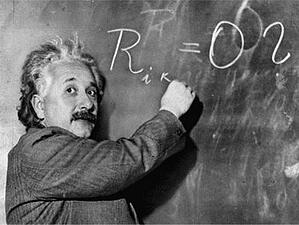
Einstein won the 1921 Nobel Prize in Physics “for his services to Theoretical Physics, and especially for his discovery of the law of the photoelectric effect.” The Nobel Committee wrote that it was awarding the prize to Einstein “without taking into account the value that will be accorded your relativity and gravitational theories after these are confirmed in the future.” While astrophysicist Arthur Eddington had proved the theory of relativity in 1919, the Nobel Committee believed Eddington’s work was too unreliable to serve as proof.
5. He Never Touched His Nobel Prize Money
Einstein divorced his first wife, Mileva, on February 14, 1919. As part of their divorce settlement, Einstein signed away all future Nobel Prize money, in the event that he should win some. The money was placed in a trust for his sons. His wife could use the interest on the money, but had no ability to access the capital.
6. He Suggested an Alternate Big-Bang Theory
According to a recently discovered manuscript, Einstein proposed an alternate Big-Bang theory in 1931. The document was stored in the Albert Einstein Archives in Jerusalem and overlooked for decades. While it had been available for view online, the manuscript was mistakenly described as the first draft for a different paper. The document shows Einstein’s initial excitement over the Big-Bang theory, a “rough draft” according to James Peebles of Princeton University. However, as Einstein never pursued the concept, academics believe that he was merely exploring an intriguing idea.
7. He Had a Terrible Memory
Einstein’s memory was notoriously poor. He was unable to remember dates and could not remember his own phone number. As a student, one of his teachers claimed that he had a memory like a sieve. Once when he was traveling on a train, the conductor approached to collect his ticket. Einstein began searching his pockets, but the conductor recognized him and said he could ride for free. Einstein responded, “Thank you, but if I don’t find my ticket I won’t know where to get off the train.”
8. He Was Offered (and Declined) The Presidency of Israel
Shortly after the death of Israel’s first president, Chaim Weizmann, David Ben-Gurion asked Einstein to become the second president of Israel. Einstein declined, stating that at 73 years of age he was too old for the job and that he lacked the “natural aptitude and the experience to deal properly with people.”
9. His Body Was Cremated… Except for His Brain
After performing an autopsy on Einstein’s body, pathologist Thomas Harvey kept his brain after the rest of the body was cremated. Despite violating Einstein’s wishes, Harvey convinced Einstein’s son to let him keep it for further study. Although Princeton fired Harvey, he kept Einstein’s brain more than forty years, chopping it into pieces and storing it in two mason jars. He occasionally sent pieces of the brain to specialists around the country, some of whom discovered unique attributes to the brain. In one test, the tissue appeared denser than in normal brains and the inferior parietal lobe was larger. Finally, in 1998, Harvey returned the brain to Princeton University saying, “Eventually you get tired of the responsibility of having it.”
10. His Final Words Were Lost in Translation
Einstein died in his sleep at Princeton Hospital on April 18, 1955. He suffered a ruptured aneurysm and refused surgical treatment. He explained, “I want to go when I want. It is tasteless to prolong life artificially. I have done my share, it is time to go. I will do it elegantly.” Before dying, Einstein said a few words to the nurse, but he spoke in German and the nurse did not understand.
When Einstein was born on March 14, 1879, his parents were afraid that he was deformed because his head was so large and misshapen. Their physician was not concerned and within a few weeks, Einstein’s head was shaped normally. However, his grandmother said, “Much too fat, much too fat!” the first time she saw him.
Later, Einstein’s parents thought he might be mentally retarded because he did not speak until he was four years old. He broke his silence one night at dinner saying, “The soup is too hot.” When his parents asked why he had not spoken previously, the young Einstein responded, “Because up to now everything was in order.” Still, he spoke only haltingly until he was nine years old, practicing sentences in his head or under his breath until he got them right.
2. He Had an Illegitimate Daughter
Before Einstein married his first wife, Mileva, they discovered that she was pregnant. They were too poor to marry and so Mileva returned to her family and gave birth to a girl named Lieserl. Einstein and Mileva kept the child’s existence a secret and it is unknown what happened to the girl or if Einstein ever saw her. Most believe that Lieserl either died from scarlet fever or was given up for adoption while still a baby.
3. He Created Strict Rules for His First Wife
Einstein grew apart from his first wife, Mileva, after becoming a successful academic. After they tried reconciling, Einstein proposed a “contract” under which they could continue living together. His conditions were as follows:
A. You will make sure
1. that my clothes and laundry are kept in good order;
2. that I will receive my three meals regularly in my room;
3. that my bedroom and study are kept neat, and especially that my desk is left for my use only.
B. You will renounce all personal relations with me insofar as they are not completely necessary for social reasons.
He further demanded that, “you will stop talking to me if I request it.” Mileva accepted his terms, but the two ultimately divorced.
4. He Did Not Win the Nobel Prize for His Theory of Relativity
Einstein won the 1921 Nobel Prize in Physics “for his services to Theoretical Physics, and especially for his discovery of the law of the photoelectric effect.” The Nobel Committee wrote that it was awarding the prize to Einstein “without taking into account the value that will be accorded your relativity and gravitational theories after these are confirmed in the future.” While astrophysicist Arthur Eddington had proved the theory of relativity in 1919, the Nobel Committee believed Eddington’s work was too unreliable to serve as proof.
5. He Never Touched His Nobel Prize Money
Einstein divorced his first wife, Mileva, on February 14, 1919. As part of their divorce settlement, Einstein signed away all future Nobel Prize money, in the event that he should win some. The money was placed in a trust for his sons. His wife could use the interest on the money, but had no ability to access the capital.
6. He Suggested an Alternate Big-Bang Theory
According to a recently discovered manuscript, Einstein proposed an alternate Big-Bang theory in 1931. The document was stored in the Albert Einstein Archives in Jerusalem and overlooked for decades. While it had been available for view online, the manuscript was mistakenly described as the first draft for a different paper. The document shows Einstein’s initial excitement over the Big-Bang theory, a “rough draft” according to James Peebles of Princeton University. However, as Einstein never pursued the concept, academics believe that he was merely exploring an intriguing idea.
7. He Had a Terrible Memory
Einstein’s memory was notoriously poor. He was unable to remember dates and could not remember his own phone number. As a student, one of his teachers claimed that he had a memory like a sieve. Once when he was traveling on a train, the conductor approached to collect his ticket. Einstein began searching his pockets, but the conductor recognized him and said he could ride for free. Einstein responded, “Thank you, but if I don’t find my ticket I won’t know where to get off the train.”
8. He Was Offered (and Declined) The Presidency of Israel
Shortly after the death of Israel’s first president, Chaim Weizmann, David Ben-Gurion asked Einstein to become the second president of Israel. Einstein declined, stating that at 73 years of age he was too old for the job and that he lacked the “natural aptitude and the experience to deal properly with people.”
9. His Body Was Cremated… Except for His Brain
After performing an autopsy on Einstein’s body, pathologist Thomas Harvey kept his brain after the rest of the body was cremated. Despite violating Einstein’s wishes, Harvey convinced Einstein’s son to let him keep it for further study. Although Princeton fired Harvey, he kept Einstein’s brain more than forty years, chopping it into pieces and storing it in two mason jars. He occasionally sent pieces of the brain to specialists around the country, some of whom discovered unique attributes to the brain. In one test, the tissue appeared denser than in normal brains and the inferior parietal lobe was larger. Finally, in 1998, Harvey returned the brain to Princeton University saying, “Eventually you get tired of the responsibility of having it.”
10. His Final Words Were Lost in Translation
Einstein died in his sleep at Princeton Hospital on April 18, 1955. He suffered a ruptured aneurysm and refused surgical treatment. He explained, “I want to go when I want. It is tasteless to prolong life artificially. I have done my share, it is time to go. I will do it elegantly.” Before dying, Einstein said a few words to the nurse, but he spoke in German and the nurse did not understand.
Light tomorrow with today.......

1. “Light tomorrow with today.” ~Elizabeth Barrett Browning | Tweet this
Today is your opportunity to make your tomorrow better. If you think of it from the point that your today is the result of your yesterdays, it’s clear that what you are doing today is either moving your forward or moving you backward. That’s why you want to grab today by the horns and make the most of it as you can. Do that enough times and you’ll start to see signs that your todays are getting better, which only sets you up better and better for tomorrow. You can find yourself in negative or positive spiral based on how well you are spending your days.
The best dreams happen when.......

1. “The best dreams happen when you’re awake.” ~Cherie Gilderbloom |Tweet this.
Living a life that feels like a dream is the ultimate goal, isn’t it? You don’t want to save your best experiences for dreams experienced while you’re sleeping, because as tantalizing as they are they aren’t real. Having real moment in life that feel surreal and dreamlike is a wonderful thing to have, and the good news is that you can create this with focus and determination by making it your goal. Pick something you think would be a dream to be, do, or have, and then put all of your resources into attaining it. When you get there once you’ll be hooked, and you’ll want to move onto the next dreamlike moment.
Tough times never last.....
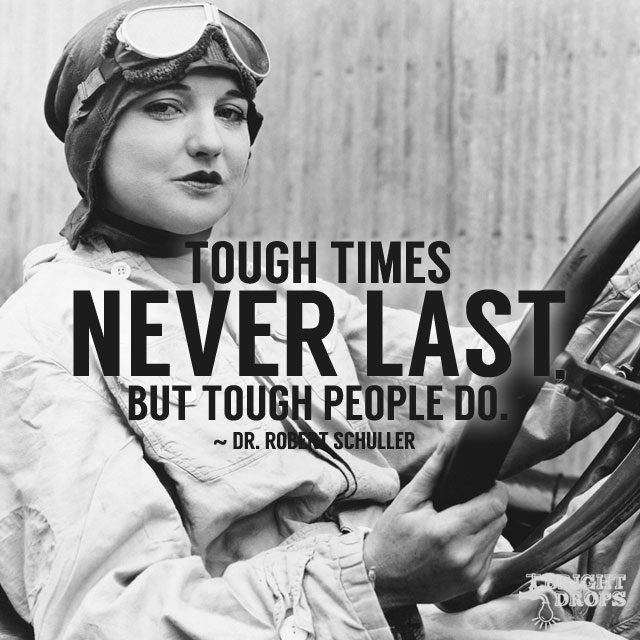
1.“Tough times never last, but tough people do.” ~Dr. Robert Schuller |Tweet this
It’s true that even the toughest of times don’t last forever, and as long as you remain strong you’ll make it through and be able to weather whatever storms come your way. The human spirit has shown that it’s capable of making it through tough times, and getting to the end of the tunnel. The best part of dealing with adversity is that it toughens you up for the next trial in your life. Knowing that you’re only getting better with each new struggle can be an inspiration during those times when you feel like giving up. Being a tough person doesn’t mean you have to be callous, it just means you have an inner strength that’s battle-tested.
If the choice were made......

1. 😁😁😁😁😁😁If the choice were made, one for us to lose our sovereignty and become a member of the Commonwealth or remain with our sovereignty and lose the membership of the Commonwealth, I would say let the Commonwealth go.
😀😀😀😀😀😀😀
2. What is the problem? We now have aeroplanes which can take them back quicker than the ships used by their ancestors.😆😆😆😆😆
Did you know?..honey is the only....

Did you know?..the longest recorded flight of a chicken was 13 seconds
Did you know?..the 3 most common languages in the world are Mandarin Chinese, Spanish and English
Did you know?..the average person falls asleep in 7 minutes
Did you know?..the longest street in the world is Yonge street in Toronto Canada measuring 1,896 km (1,178 miles)
Did you know?..honey is the only natural food which never spoils.
Did you know?..More than 60,000 people are flying Over the United States in an airplane right now.
Did you know?..During your lifetime, you will produce enough saliva to fill two swimming pools.
Did you know?....
Continue reading thousands of these facts (above), only by clicking here down to download the facts you never know before.....
You must have been born

1. 😟😟😟😟I guess you prove that even god makes mistakes sometimes.
2. If I wanted to kill myself I'd climb your ego and jump to your IQ.
😔😔😔
3. You must have been born on a highway because that's where most accidents happen.
😴😴😴😴😴😴
One advantage of talking.......

1.😾😾😾 One advantage of talking to yourself is that you know at least somebody's listening.
2. If laughter is the best medicine, your face must be curing the world.
3. You're so ugly, you scared the crap out of the toilet.😩😩😩
4.Your family tree must be a cactus because everybody on it is a prick.
😔😔😔😔😔
5. No I'm not insulting you, I'm describing you.😖😖😖😖😖😨😨😨
Life is short, smile while......

1. 😳😳😳😳Life is short, smile while you still have teeth.
2. A balanced diet means a cupcake in each hand.😪😪😪😪😪
3. Maybe you should eat some makeup so you can be pretty on the inside too.
😩😩😩😩
Where did HIV come from?

Scientists identified a type of chimpanzee in West Africa as the source of HIV infection in humans. They believe that the chimpanzee version of the immunodeficiency virus (called simian immunodeficiency virus or SIV) most likely was transmitted to humans and mutated into HIV when humans hunted these chimpanzees for meat and came into contact with their infected blood. Over decades, the virus slowly spread across Africa and later into other parts of the world.
The earliest known case of infection with HIV-1 in a human was detected in a blood sample collected in 1959 from a man in Kinshasa, Democratic Republic of the Congo. (How he became infected is not known.) Genetic analysis of this blood sample suggested that HIV-1 may have stemmed from a single virus in the late 1940s or early 1950s.
We know that the virus has existed in the United States since at least the mid- to late 1970s. From 1979–1981 rare types of pneumonia, cancer, and other illnesses were being reported by doctors in Los Angeles and New York among a number of male patients who had sex with other men. These were conditions not usually found in people with healthy immune systems.
In 1982 public health officials began to use the term "acquired immunodeficiency syndrome," or AIDS, to describe the occurrences of opportunistic infections, Kaposi's sarcoma (a kind of cancer), and Pneumocystis jirovecii pneumonia in previously healthy people. Formal tracking (surveillance) of AIDS cases began that year in the United States.
In 1983, scientists discovered the virus that causes AIDS. The virus was at first named HTLV-III/LAV (human T-cell lymphotropic virus-type III/lymphadenopathy-associated virus) by an international scientific committee. This name was later changed to HIV (human immunodeficiency virus).
For many years scientists theorized as to the origins of HIV and how it appeared in the human population, most believing that HIV originated in other primates. Then in 1999, an international team of researchers reported that they had discovered the origins of HIV-1, the predominant strain of HIV in the developed world. A subspecies of chimpanzees native to west equatorial Africa had been identified as the original source of the virus. The researchers believe that HIV-1 was introduced into the human population when hunters became exposed to infected blood.
This Is How Donald Trump Actually Got Rich!!

President Donald J. Trump, the controversial real estate mogul who was elected as the 45th President of the United States, has boasted widely about having a net worth of more than $10 billion. Forbes lists President Trump's 2018 net worth at $3.1 billion that makes him the 259th-richest person in the country. While Trump dropped 11 spots on Forbes' ranking as compared to the previous year and slid 138 spots since he announced his Presidential bid in 2015, he is nevertheless one of the wealthiest U.S. Presidents.
His brand
Donald Trump
The Trump Family Fortune
Trump's father, Frederick Christ "Fred" Trump, made a sizable fortune by building and selling housing for American soldiers and their families in World War II. It was at his father's real estate company that Trump got his start in business. In 1971, he took control of his father's apartment rental company, Elizabeth Trump & Son Co., and later on, he renamed it The Trump Organization. Trump stuck mostly with real estate investments during this period, particularly condo associations, huge apartment buildings and Federal Housing Administration (FHA)-backed housing, all in the New York metropolitan area.
Trump hit a milestone in 1980 when he teamed up with the Holiday Inn, Corp., (then parent company of Harrah's casino resorts) to develop a $250 million hotel and casino complex in Atlantic City, named Harrah's at Trump Plaza.
Eventually, Trump would buy out his partners and rename the property Trump Plaza Hotel and Casino. Following the successful launch of Trump Plaza, Trump purchased a second property in Atlantic City from Hilton Hotels for a sum of $320 million. After the hotel chain had failed to obtain a gaming license, in classic Trump fashion he renamed this latest purchase Trump Castle.
Trump's Setbacks
Back in New York, Trump purchased the Plaza Hotel in 1988 for over $400 million and spent an additional $50 million renovating and redecorating under his wife, Ivana Trump’s, direction. While it seemed nothing could stop Trump’s meteoric rise in the 1980s, even the most ambitious real estate tycoons are at the mercy of city bylaws. When Trump purchased an apartment building and an adjacent hotel in Manhattan, Trump’s plans for a large condominium tower on the site were curtailed by the city’s rent control programs. In 1985, when Trump unveiled his plans for an $88 million complex on the West Side of Manhattan, dubbed 'Television City,' community opposition, and a lengthy approval process ended Trump’s vision for the project.
However, these two failures pale in comparison to the setbacks that would soon befall the Trump organization. In 1990, when the booming real estate market of the 1980s began to decline, many of Trump’s highly leveraged investments began to weigh heavily on the company’s balance sheets.
Trump Faces Bankruptcy
Ultimately, in the early 1990s, Trump’s winning streak ground to a halt. The national economy started to slow down, and New York's economy stalled, causing Trump’s income streams to dwindle. Soon, he found it difficult to make the interest payments on the debt he'd accrued to finance his different businesses. Trump's annual loan payments were $300 million. The Trump Organization and its subsidiaries owed $9 billion, and Trump's personal debt totaled $975 million.
To avoid having to file for bankruptcy, Trump met with four of his major lenders: Citibank (C), Bankers Trust, Chase Manhattan Bank and Manufacturers Hanover Trust Co. (now owned by JPMorgan Chase Bank, National Association). The banks were concerned that if they foreclosed on his properties they, too, would lose tremendous amounts of money. In the end, Trump convinced the banks to loan him an additional $65 million, which he'd use to keep his businesses afloat. The banks also agreed to defer, for five years, the interest and principal payments on Trump's outstanding loans. Some of Trump's debts were paid down with funds from the sale of his assets, which included an airline company (Trump Shuttle) and a yacht (which was sold to Saudi billionaire Prince Alwaleed Bin Talal). Trump also sold his controlling stake in the Plaza Hotel and turned his Florida beach house, Mar-a-Largo, into a resort.
The Trump Organization famously revealed it was $5 billion in the hole in 1990, with as much as $1 billion guaranteed by Donald Trump personally. The business survived thanks to a combination bailout/deferment by more than 70 banks. Many point to the 1988 purchase of the Taj Mahal Casino as a major catalyst for the Trump debt cycle. There is some truth in this, particularly after Trump unsuccessfully tried to finance the construction of its sister casinos in 1989 through mostly junk bonds.
The bailout package allowed him to take out second and third mortgages on most of his properties. Leverage became a common theme for Trump, who notoriously dealt with bankruptcy four times. Trump used the extra rope from his lenders to shore up debt, build up his rents and purchase other enterprises, including more casinos.
The early 1990s were tumultuous for the Trump Organization and Donald's business prospects. In 1991 and 1992, two of Trump’s Atlantic City casinos (the Trump Taj Mahal and the Trump Plaza Hotel) filed for Chapter 11 bankruptcy, which allowed them to restructure their debt. As a result of the onerous debt, in 1991, Trump was forced to cede 50% of ownership in the Taj Mahal to his bondholders in exchange for lower interest payments and extra deferments. Shortly after, Trump combined his three Atlantic City casinos, forming a single company, called Trump Entertainment Resorts.
1995 and the Trump Turnaround
Fortunes began to change in 1995. That year, Trump established Trump Hotels and Casino Resorts, Inc. and took the company public, eventually selling 13.25 million shares at $32.50 a share in 1996 for a tidy capital gain of $290 million over his original ownership stake.
Also, in the mid-1990s one of Trump's initial investments, the Grand Hyatt building that opened in 1980, became wildly successful. Trump quickly sold his stake back to Hyatt for a reported $140 million.
Later in 1995, Trump purchased the old Bank of Manhattan Trust building located at 40 Wall Street. This building would go on to become one of his most famous properties. Trump claims he bought the building for just $1 million, though this is likely an exaggeration. The building was available at a discount however after another deal with former Filipino President Ferdinand Marcos fell through, and the owners of the building became desperate. The net value of this building, best-known as the Trump Building, is now worth $530 million according to Forbes.
Trump’s Inheritance
Fred Trump died in 1999 with an estimated net wealth between $250 million and $300 million according to a New York Times article at the time of death. While the specific amount Trump inherited from his father has not been revealed, a January 2016 article from the New York Times shows that Trump's will divided $20 million after taxes among his living children including Donald. Further, in 2003, it was reported that Donald and his siblings sold a portion of their father’s real estate holdings for around half a billion dollars. In addition to this inheritance, Trump’s father helped the mogul financially throughout his lifetime by giving him loans and access to trust funds, and establishing a wealth of real estate and political connections for his son.
An October 2018 report in the New York Times alleges that Trump engaged in dubious practices that helped his parents evade taxes and enriched him in the process.
‘The Apprentice’ Makes Hundreds of Millions
Trump got his start on TV as a wrestling character on the World Wrestling Entertainment’s 'Wrestlemania' in the 1980s and never looked back, eventually starring in a reality TV show about his business called, ‘The Apprentice.’ Trump’s name recognition skyrocketed after 'The Apprentice' aired in 2004. In each season, more than a dozen contestants vied for a six-figure paying managerial position at one of Trump's many companies. A press statement issued by the Trump presidential campaign states that during the ten-year history of ‘The Apprentice’ and its spin-off series ‘The Celebrity Apprentice,’ Trump made a total of $214 million. (See also: 7 "Apprentice" Hosts From Around the World.)
The Trump Brand: A Bestseller
If you want to understand Trump, the billionaire, you have to look past Trump the real estate investor. You have to think of Trump as a brand name, just like Coca-Cola Co. or Nike Inc.
Many of the properties that bear the Trump name aren't actually owned by the mogul. The Trump Organization has been known to partner with developers in licensing deals. In such an arrangement, a developer pays Trump a licensing fee; in exchange, they're given permission to brand their building with the Trump name and logo. Trump benefits by receiving a regular stream of royalties, while the developer can increase the rates she charges because the Trump name signifies high quality and luxury. According to Trump, his real estate licensing deals, intellectual property, brands and branded development are worth more than $3.3 billion; however, Forbes pegs this number at around $253 million.
In addition to real estate, Trump has lent his name to a diverse list of products ranging from mattresses and apparel to fragrances and furniture. These licensing deals contribute to Trump's annual income. In 2014 alone, Trump brought in $3.25 million via consumer products licensing according to Forbes. Trump has found another way to monetize his outspoken nature—by charging speaking fees for conferences and other functions. Between May 2014 to March 2015, he spoke at several engagements and charged as much as $450,000 for each presentation. Overall speaking engagements contributed $1.75 million to Trump's income during that period alone.
'The Art of the Deal' and Trump's Books
While Trump gained prominence and notoriety in the 80s through his business deals and colorful television appearances, he skyrocketed to a new level of fame when he released his first book. ‘The Art of the Deal,’ was released in November 1987. It spent 51 weeks on the bestseller list and has sold around 1 million copies thus far according to most reports.
Now, ‘The Art of the Deal,’ is making headlines again in 2016, following a controversial interview in The New Yorker with the book’s co-author Tony Schwartz. Schwartz claims he wrote “every word,” of the popular book. “Donald Trump made a few red marks when I handed him the manuscript, but that was it,” he said in an interview with ABC’s 'Good Morning America.'
Schwartz, who observed Trump almost daily for 18 months when penning 'The Art of the Deal,' describes Trump as a dangerous sociopath whose successes were mythicized in 'The Art of the Deal.' Schwartz says he now regrets writing the book:“I feel a deep sense of remorse that I contributed to presenting Trump in a way that brought him wider attention and made him more appealing than he is,” Schwartz told The New Yorker. In response to Schwartz’s ‘Good Morning America’ interview and New Yorker article, Trump’s camp has issued Schwartz a cease-and-desist letter and has asked Schwartz to send a check to Trump for the royalties generated from 'The Art of the Deal,' plus his advance.
The President's disclosure revealed that ‘The Art of the Deal,’ generated royalties of $50,000 to $100,000 in 2015. A disclosure also reported income between $1 million and $5 million for his November 2015 book, 'Crippled America: How to Make America Great Again.' Trump's 2015 personal financial disclosure revealed that the billionaire received book royalties amounting anywhere from $85,000 to $215,000 in 2014.
Trump’s Real Estate Fortune Today
Though the Trump empire spans many industries, real estate development and acquisitions have always been its core business. Trump's real estate income is derived from many different types of property. The Trump Organization, for example, owns hundreds of residential units and office spaces that create regular rental income. According to Forbes, The Trump Hotel Collection and real estate licensing brought in $128 million in 2014.
The Bottom Line
Donald J. Trump has launched an empire, based largely on his name. Taking on large loans, Trump constructed many luxury hotels, apartments, and casinos, which have become iconic monuments to the excess and exuberance of the 1980s. However, Trump’s businesses have faced four bankruptcies throughout the years. The most recent one was in 2009 when Trump Entertainment Resorts was ravaged by the 2008 recession. Though he has faced near financial ruin and multiple business bankruptcies, Trump's branded products and real estate licenses remain popular and have helped to land him on the Forbes 400 for several decades.
Donald Trump's Success Story!
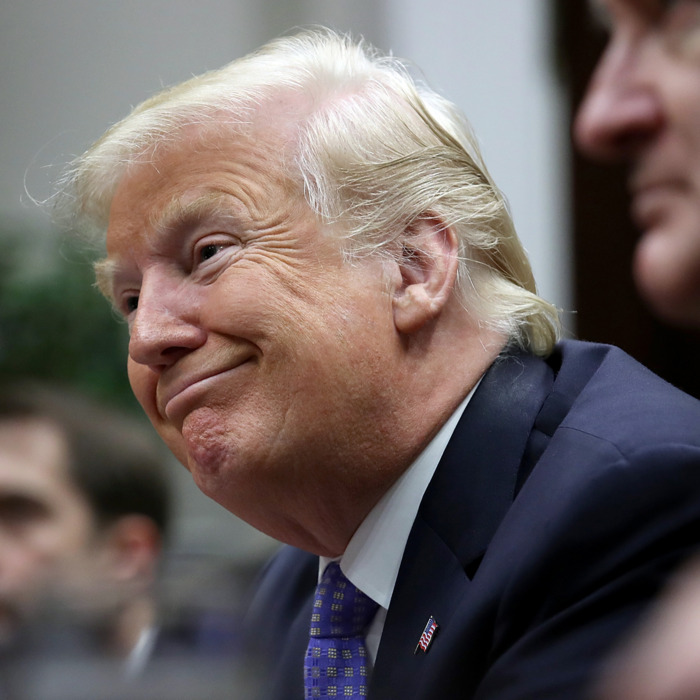
President Donald Trump is an American media personality, real estate developer and businessman with a net worth of between $3 billion and $10 billion, depending on who’s making the calculations. The most recent list of global billionaires (as released by Forbes in September 2018) puts Trump in the 766th position, with a net worth of $3.1 billion, and as the first billionaire in U.S. history to become president.
His career as a public millionaire, author and decade-long run as the star of NBC reality show "The Apprentice" have both amplified and, in some ways, overshadowed the story of Trump, the businessman.
He is currently the 45th president of the United States. He was formerly chairman and president of The Trump Organization, which he inherited from his father, Fred Trump. He is also the founder of Trump Entertainment Resorts, which is now owned by Icahn Enterprises. He turned over operations of his business empire to his two adult sons after he moved into the Oval Office in January 2017.
Trump began his career at his father's company, Elizabeth Trump & Son, working there while attending the Wharton School of the University of Pennsylvania, and joining the business full-time when he graduated in 1968. With a flair for the press and a series of high-profile construction and renovation projects in New York City, Trump’s career unfurled very much in the public eye.
Early Life and Education
Donald John Trump was born on June 14, 1946, in the New York City borough of Queens, the youngest of five children.
His mother, Mary Anne, was born on the Isle of Lewis, off the west coast of Scotland, later immigrating to the United States. His father, Fred Trump, was the son of a Klondike Gold Rush restaurateur and home builder.
At the time of Donald’s birth, his father was developing large housing complexes in New York City, especially Brooklyn, catering to middle-income soldiers returning from World War II, and their families. By the time Donald was born, Fred Trump had been a successful New York real estate developer for almost 20 years.
When Donald was a child, his father’s business ventures were a constant presence. But it was Donald’s mother who instilled in him something that would distinguish him from equally successful real estate moguls — an appreciation for the power of spectacle. As a 6-year-old, he watched as his mother was swept away by the pageantry of the coronation of Queen Elizabeth II. It made a big impression on the boy.
"I realize now that I got some of my sense of showmanship from my mother," he writes. "She always had a flair for the dramatic and the grand.”
His parents raised their large family in a two-story mock-Tudor home in Jamaica Estates, Queens. As a child, Donald went to Kew-Forest School in Forest Hills, Queens, a private school at which Fred was on the Board of Trustees. At an early age, Donald began getting into trouble.
"In the second grade I actually gave a teacher a black eye — I punched my music teacher because I didn't think he knew anything about music, and I almost got expelled," Trump would later recall.
Worried about his son’s apparent lack of discipline, Fred moved Donald to the New York Military Academy in upstate Cornwall, New York, at the start of the eighth grade. Donald would remain there throughout high school. He graduated with the rank of cadet captain, and later credited the school as the place where he learned to channel "aggression into achievement."
On holidays and summers as a teenager, Donald followed Fred around to building sites in Brooklyn, where his father would routinely out build and buy out his rivals.
"My father would start a building in, say, Flatbush, at the same time that two competitors began putting up their own buildings nearby. Invariably, my father would finish his building three or four months before his competitors did. His building would always be a little better looking than the other two, with a nicer, more spacious lobby and larger rooms in the apartments themselves,” Trump stated. “Eventually, one or both of his competitors would go bankrupt before they'd finish their buildings, and my father would step in and buy them out," he added.
Following high school, Trump attended Fordham University in the Bronx. After two years, he transferred to the Wharton School at the University of Pennsylvania, which offered, at the time, one of the only real estate studies departments in the country. He graduated with a B.S. in economics in 1968.
While in school, Donald worked for his father part-time, coming on officially after graduating. Those years were an education for the young man. One of the primary lessons he learned concerned the psychology of the real estate business. His father’s building projects were keyed into the aspirational mindset of the American people, catering to working-class people who wanted to be middle class. He offered a sense of elevation and refinement through large lobbies, sophisticated-looking facades and English names for his apartment buildings, such as Wexford Hall, Sussex Hall and Edgerton.
The early heir-apparent seemed to be the firstborn son Freddy Jr., but he took little interest in the business and died young. Donald, however, took to the real estate firm with relish, working with his father on deals in Starrett City, Brooklyn, and Forest Hills, Queens. Then the young man was ready to try his hand in Manhattan. (See also, The Irreplaceable Brand of Donald Trump.)
Trump's Foray Into the Business World
Donald Trump had been around his father Fred's real estate company, Elizabeth Trump & Son, for most of his life. But he began working for the company full-time when he graduated college in 1968 when he was 22. After working directly with his father for a few years, Donald took control of the company in 1971 and renamed it The Trump Organization. His father’s business focused on building and renting mid-market apartments in Brooklyn, Queens and Staten Island, New York; however, when Donald took over, he set his sights on Manhattan.
Donald immediately sought out building larger projects that carried higher profiles than his father’s outer-borough apartment blocks. Fred was reluctant at first, but eventually backed Donald’s projects in the heart of the Big Apple.
Donald used the tools and tricks that he’d learned at his father’s side, having inherited Fred's eye for distressed real-estate gems. And with the entirety of New York City sliding toward bankruptcy in the early '70s, there were more than a few such gems that were ripe for the picking.
Trump’s biggest early deal was rescuing the once-grand Commodore Hotel from bankruptcy and transforming it into the Grand Hyatt. He opened the refurbished hotel in 1980, with the help of a 40-year tax abatement from the City of New York.
In 1983, Trump put his stamp on the city with his 68-story Trump Tower in midtown Manhattan. The mixed-use skyscraper featured the black glass surfaces and brass trimmings that would mark many of his later buildings. The building captured the aesthetic of many baby boomers who were coming into money for the first time during the economic boom of the 1980s.
Around this time, Trump began to use his successes as a developer to dip his feet into politics. He made his first such splash with the renovation of Wollman Rink in Central Park. The fixes had begun in 1980 but were more or less in limbo by 1986. Trump publicly lambasted the inefficiency of the governmental agencies in charge of the renovation, starting a war of words with then-Mayor Ed Koch. As part of the argument, Trump offered to complete the renovation himself, for free. He finished in three months, for well below the city’s budget and to the satisfaction of most, proving his point.
His building projects and persona placed Trump squarely in the public eye. And in 1987, he capitalized on his newfound fame with a business book entitled “The Art of the Deal,” which spent 52 weeks on bestseller lists.
Trump in the 1990s and Beyond
Flush with success, Trump moved into the gaming business, buying the Taj Mahal Casino. But the move proved to be a hefty gamble, and by 1989, Trump was in more debt than he could afford. He kept afloat by taking on more loans until 1991. With bankruptcy looming, Trump’s creditors agreed to restructure his debt, taking half-ownership of the casino. The agreement also forced Trump to sell his airline, Trump Shuttle, and his 282-foot Trump Princess yacht. (See also, How Donald Trump Survived Near Bankruptcy.)
Trump gradually restored The Trump Organization’s finances. One of the deals that helped him do so involve 40 Wall Street, a 70-story tower in downtown Manhattan, originally known as the Bank of Manhattan Trust building. Trump bought the building for between $1 million and $10 million in 1995 and renovated it. He would later take out a $160 million mortgage on the building to finance other investments. By 2006, Forbes put a $260 million price tag on the property.
In 1999, when patriarch Fred Trump died, he left behind a handsome estate valued at $250 to $300 million. Although the exact amount Donald Trump inherited is unknown, an October 2018 New York Times report based on tax returns and financial statements from his businesses estimated that inheritance to be close to $413 million during the course of his lifetime. This figure has not been confirmed by Trump or the organization.
As the century turned, Donald Trump continued to buy and construct Manhattan real estate. In 2001, he completed the 72-story Trump World Tower, across the avenue from the United Nations building, and began construction on Trump Place, a series of luxury high-rises along the Hudson River.
Another bold move that paid off was Trump’s $73-million purchase of the Chicago Sun-Times building. In its place, he planned to build the tallest building in the world, Trump International Tower, Chicago. But the September 11, 2001, terrorist attacks convinced him to scale back, ultimately building the second-tallest tower in Chicago. Since it opened in 2009, the tower has been a success, especially the hotel at that location, which is regularly ranked as one of the best in the country.
Trump's Other Ventures
Trump’s career as a public figure, which had shrunk significantly following his near-bankruptcy in the early 90s, was revived after he hosted a reality TV show called "The Apprentice" in 2003. The NBC show, in which contestants vied for a management job in one of Trump's companies, was a big hit.
According to some reports, Trump received $3 million per episode of the show. In his July 2015 Federal Election Commission disclosures, Trump stated that NBC paid him $214 million for hosting and producing the show over the previous 14 seasons.
His newly refurbished fame was an opportunity for Trump to begin licensing his name and image. He began selling the Trump name to a number of real estate developments that he didn’t build himself. According to Forbes, Trump’s real-estate licensing business, with more than 30 licensed properties worldwide, is among his most valuable assets, which it estimates as being worth more than $500 million.
Trump has also affixed his brand to a wide range of businesses, including the real estate-related, though ill-timed, Trump Mortgage, which closed in 2007. Beyond real estate, he has opened eateries such as Trump Buffet, Trump Catering, Trump Ice Cream Parlor and the Trump Bar.
Some of the other business ventures he started include a Trump-branded clothing line, a fragrance, an array of food and beverage products such as Trump Steaks and Trump Vodka, and Trump Magazine. Trump University, opened in 2005, promised to teach students about the ins and outs of the real estate business. The operation closed down in 2010 and was the subject of multiple lawsuits.
Trump's Quotes on Success
......Donald Trump, or "The Donald" as he is popularly known, has said many memorable things. His comments on Muslims, women and current affairs events have stirred controversy and criticism. Here is a selection of his more noteworthy and thoughtful words on success in business.
.......“The more predictable the business, the more valuable it is.” Trump on valuing known quantities more than speculative schemes.
.......“Success comes from failure, not from memorizing the right answers.” Trump on the irreplaceable value of real-life experience, even negative ones, in an education.
......“Get going. Move forward. Aim High. Plan a takeoff. Don't just sit on the runway and hope someone will come along and push the airplane. It simply won't happen. Change your attitude and gain some altitude. Believe me, you'll love it up here.” Trump on taking initiative and positive thinking.
......“What separates the winners from the losers is how a person reacts to each new twist of fate.” Trump on the constant tests that life provides.
......“Remember there’s no such thing as an unrealistic goal, just unrealistic time frames.” Trump on how he views the collision of grand ambitions and real-life obstacles.
.....“Watch, listen and learn. You can’t know it all yourself. Anyone who thinks they do is destined for mediocrity.” Trump on remaining open to new information.
The Bottom Line
Donald Trump's brash and colorful style and comments propelled him from the business world to the general public's eye. His 1987 book, “The Art of the Deal,” captured the exuberant, materialistic spirit of the 1980s, and spent almost a full year on bestseller lists. The book, co-written by Tony Schwartz, gave the public an insight into Trump's business philosophies and cemented Trump's success.
By 1991, however, bankruptcy forced Trump to sell his Trump Shuttle airline, his 282-foot yacht, the Trump Princess and also hand over large portions of his casino holdings. However, in the mid-'90s, the fortunes of the family business had begun to turn around. Trump rejoined the Forbes 400 list in 1996, after a six-year absence. In 1996, Trump also re-entered the public eye, buying the rights to the Miss America pageant. His profile rose higher when he began his starring role on "The Apprentice" in 2004, with millions tuning in to watch Trump fire aspiring executives.
In addition to real estate and casinos, Trump has branched out into a seemingly endless number of businesses, with Trump-branded apparel, education, athletic events such as the Tour de Trump and even a board game. In 2015, Trump publicly announced that he would run for the presidency of the United States as a Republican. He won the hotly contested election on November 8th, beating the Democratic nominee and former Secretary of State Hillary Clinton, and has been, perhaps, the most controversial president in the country's history.
Did you know these wonders????

Did you know these wonders????
Did you know Coca-Cola originally contained cocaine
Did you know toilets use 35% of indoor water use
Did you know the fortune cookie was invented in San Francisco
Did you know Koalas sleep around 18 hours a day
Did you know the first Burger King was opened in Florida Miami in 1954
Did you know all insects have 6 legs
Did you know the croissant was invented in Austria
Did you know In eastern Africa you can buy beer brewed from bananas
Did you know African Grey Parrots have vocabularies of over 200 words
Did you know a giraffe can clean its ears with its 21 inch tongue
Did you know Australia was originally called New Holland
Did you know'Lonely Planet' for travelers is based in Melbourne Australia
Did you know the sentence "the quick brown fox jumps over the lazy dog" uses every letter in the
English alphabet
Did you know the Grand Canyon can hold around 900 trillion footballs
Did you know all the blinking in one day equates to having your eyes closed for 30 minutes
Did you know your foot has 26 bones in it
Did you know the average human brain contains around 78% water
Did you know 1 nautical knot equates to 1.852 Kph (1.150 mph)
Did you know facts!!
Dear ladies, The silence you.....

1.😂😂😂😂 An expensive weave can never reduce the effect of cheap brains....
😕😕😕😕😕😕😕😟😟😟😟😟😟
2. 😛😛😛😛😛😛😛Dear ladies, The silence you keep when you find money in your husband's pockets during laundry,kindly do the same when you find condoms.
Did you know the Following truth?!!.....

Did you know these facts!!.......
Did you know "dreamt" is the only word that ends in mt
Did you know the first letters of the months July through to November spell JASON
Did you know a cat has 32 muscles in each ear
Did you know Perth is Australia's windiest city
Did you know Elvis's middle name was Aron
Did you know goldfish can see both infrared and ultraviolet light
Did you know the smallest bones in the human body are found in your ear
Did you know cats spend 66% of their life asleep
Did you know Switzerland eats the most chocolate equating to 10 kilos per person per year
Did you know money is the number one thing that couples argue about
Did you know macadamia nuts are toxic to dogs
Did you know when lightning strikes it can reach up to 30,000 degrees Celsius (54,000 degrees Fahrenheit)
Did you know spiders are arachnids and not insects
Did you know each time you see a full moon you always see the same side
Did you know stewardesses is the longest word that is typed with only the left hand
Did you know honey is the only natural food which never spoils
Did you know M&M's chocolate stands for the initials for its inventors Mars and Murrie
Did you know that you burn more calories eating celery than it contains (the more you eat the thinner you become)
Did you know the only continent with no active volcanoes is Australia
Did you know the longest street in the world is Yonge street in Toronto Canada measuring 1,896 km (1,178 miles)
Who Invented Numbers?

One plus one equals two. There are 60 seconds in one minute. Sixty minutes equals one hour. There are 24 hours in one day. One year consists of 365 days. These are all basic facts that we know by heart, but they highlight the importance of one thing: numbers.
Can you imagine a world without numbers? It's safe to say that society as we know it today would never have developed without numbers. The scientific and technological advances upon which society is built depend upon mathematics, which in turn depends up on numbers.
Despite their importance, the development of numbers remains mostly a mystery. That's because the first ancient prehistoric people who likely developed simple methods of counting didn't leave any records behind to explain themselves.
Common sense and ancient evidence points to the idea that numbers and counting began with the number one. Although they probably didn't call it "one," prehistoric people likely counted by ones and kept track by carving lines on a bone.
Evidence that this occurred as long as 20,000 years ago can be found on an ancient artifact known as the Ishango Bone. Found in Africa in 1960, the Ishango Bone (a fibula of a baboon) features a series of lines that look like what we would call "tally marks" today.
Keeping track of small numbers of items with tally marks was sufficient for individuals and small groups. As societies began to form and grow, however, trade became more complex, requiring the development of numbers to perform simple mathematical calculations.
Historians believe numbers and counting expanded beyond one around 4,000 B.C. in Sumeria, which was located in southern Mesopotamia in what is now southern Iraq. One of the first civilizations to feature cities that were centers of trade, the people of Sumeria needed new methods of counting and record-keeping.
While new numbers and counting systems were being developed in Sumeria, so were the basics of arithmetic and writing. Keeping track of goods being traded required writing and basic addition and subtraction in addition to an expanded number and counting system.
All of these foundational ideas developed simultaneously as cities grew and trade flourished. Some historians believe that some of these same ideas developed independently in other areas of the world, too.
For example, the Arabic numeral system we're all familiar with today is usually credited to two mathematicians from ancient India: Brahmagupta from the 6th century B.C. and Aryabhat from the 5th century B.C.
Eventually, numbers were necessary for more than simply counting things. We can thank the ancient Egyptians for making the leap from using numbers to count to using them to measure things. Historians believe their use of numbers for measurement allowed the ancient Egyptians to build the pyramids and lay the foundation for advanced mathematics concepts, such as geometry.
Try It Out
Are you ready to count? Don't forget to check out the following activities with a friend or family member:
Can you believe that some of the oldest evidence of numbers was found on a bone? Jump online to check out the Mathematical Treasure: Ishango Bone page to learn more about this interesting artifact. If you had found this bone, would you have had any idea what it showed and how important it was?
Do you rely heavily on numbers on a daily basis? You might be surprised! Try going as long as you possibly can without using any numbers. That means no television, since you need numbers to choose the proper channel. You also can't throw a snack in the microwave, since you'd need numbers to program it to cook for a certain amount of time. How else do numbers come up? Once you start thinking about it, you'll be amazed at how interwoven numbers are in your daily life!
You're familiar with the normal base-10 number system that uses 0-9, but did you realize there are a variety of other number systems out there, such as base-8, base-2, and even base-16? Check out Number Systems online to learn how these other interesting number systems work!
How Did Earth Begin?

This planet we call home is an amazing place. It's been around for as long as we can remember. But how did it get to be that way? Exactly how did Earth come into existence?
For some people, WONDERing about how Earth came to exist is more of a philosophical question. It happened so long ago that it's hard to know for sure how it all happened. No one was around back then to document things.
Many religions around the world have specific beliefs about how Earth began. Some believe a divine creator brought Earth and all of the things in the universe into being. Others believe that tangible, physical processes are responsible.
In today's Wonder of the Day, we'll take a look at the prevailing view held by most scientists regarding how Earth formed. So let's get things started with a bang. A big bang to be exact!
Billions of years ago, all matter of the universe was compressed into one tiny point until it finally exploded around 12-14 billion years ago. This explosion is what scientists call the Big Bang.
During this time, humongous masses of dust and gas spewed throughout space. These remnants of the explosion combined with other clouds of gas to form the ingredients that would eventually turn into our galaxy.
The explosion's massive energy made the mixture of gas and dust very hot. As the pieces of dust swirled about, they started to compress to form small clusters, which in turn joined other small clusters to make bigger and bigger lumps of matter.
As these lumps of matter got larger, they began to pull together under the force of their own gravity. The largest of these lumps in the center eventually became so dense and hot that it began to generate its own energy. This is how our Sun was born.
The rest of the lumps of matter formed a disc around the Sun. Over time, the Sun got bigger while the dusty disc surrounding it cooled. As this process occurred over millions of years, lumps of dust again began to form into larger and larger chunks of rock, called planetesimals, which became large enough to have their own gravitational pull.
The largest of the planetesimals became the earliest forms of the planets that make up our solar system today. Slowly, they organized themselves in orbits around the Sun and their gravitational pulls cleared the areas around them of rocky material.
Scientists believe Earth formed in this way about 4.6 billion years ago. Early in the process of its formation, a planetesimal the size of Mars hit Earth, knocking a big chunk of Earth into space. Scientists believe that chunk started its own orbit around Earth, becoming our Moon. They also believe this collision changed the angle of Earth's tilt to its current orientation, which gives us our seasons.
Early Earth didn't look anything like it does today. It was simply a big ball of rock without oceans, continents, or atmosphere. Continued collisions with meteorites, along with radioactive decay and further compression due to gravity, heated up Earth until it reached the melting point of iron and Earth's core was formed.
Over millions of years, Earth eventually cooled and its composition settled into the core, mantle, and crust we know of today. Scientists believe Earth's oceans and atmosphere didn't come along until about four billion years ago, as a result of volcanic activity or meteors hitting Earth and releasing water and gases trapped under its surface.
Try It Out
In the beginning…there was…what? Keep exploring the origins of Earth with your friends and family members when you check out the following activities:...
Take some time today to spend outside with friends and family members, just enjoying nature. Mother Earth is a WONDERful planet to call home. Think about the ideas scientists have about how it formed. Can you find some dust and gases around you? Is your imagination strong enough to comprehend such materials swirling in a cosmic soup and eventually forming into the planet we call home? Share what you learned with a friend or family member. What ideas or questions do they have? Have fun contemplating the origin of Earth with them!
Pretend that you're a scientist who has been tasked with finding proof—on Earth—of the theories widely accepted to explain Earth's formation. What would you look for? Where would you look? Put together a game plan for how you might tackle such an immense task. Do some independent research. Has anyone tried any of your ideas in their research?
Up for a challenge? Explore Earth's beginnings in depth. Visit the BBC website to read through the Earth timeline. Follow along from stage to stage to learn more about how Earth developed slowly over billions of years. If you could have been alive to witness any particular stage, which stage would you choose? Why?
Subscribe to:
Posts
(
Atom
)


